Small businesses often assume that criminals target only large organisations. In reality, many smaller businesses become targets because their systems, websites, accounts, and processes are often easier to exploit. A single weak password, outdated plugin, or poorly controlled account can lead to disruption, financial loss, and reputational damage.
Fortunately, many cybersecurity issues are avoidable. Businesses do not always need expensive enterprise tools to become safer. Often, they need stronger basic controls, clearer internal processes, and a more consistent approach to managing risk.
“Small businesses are often not under-protected because they lack tools but because they lack consistent basics.”
1. Relying on Passwords Alone
One of the most common mistakes businesses still make is protecting important accounts with only a password. If that password is weak, reused, guessed, or stolen in a phishing attack, the account may be exposed immediately.
What to do instead. . .
Enable multi-factor authentication for all critical services, especially email, Microsoft 365, cloud platforms, financial tools, and website administration accounts. This adds another layer of protection, making unauthorised access much more difficult.
2. Giving Too Many People Too Much Access
In some businesses, everyone ends up with broad access simply because it feels easier operationally. Over time, this creates unnecessary risk. A staff member may have access they no longer need, a former worker’s account may stay active, or an administrative login may be shared between multiple people.
What to do instead. . .
Provide each user only the access they genuinely need for their role. Review permissions regularly and revoke access promptly when responsibilities change or someone leaves the business.
3. Ignoring Software and Plugin Updates
Outdated software is a recurring weakness, especially on business websites and internal devices. When updates are delayed for too long, known weaknesses can remain exposed.
What to do instead. . .
Maintain a simple routine for reviewing and applying updates to operating systems, business applications, Microsoft 365 settings, WordPress themes, plugins, and security tools. This does not need to be complicated, but it does need to be consistent.
4. Treating Backups as an Afterthought
Some businesses assume backups exist because a provider mentioned them once, but they do not regularly confirm what is being backed up, how often, or how recovery would work after an incident.
Ask these three questions
- What business data is being backed up?
- How quickly can it be restored?
- Has recovery been tested recently?
A backup is most valuable when it is usable, current, and understood by the business.
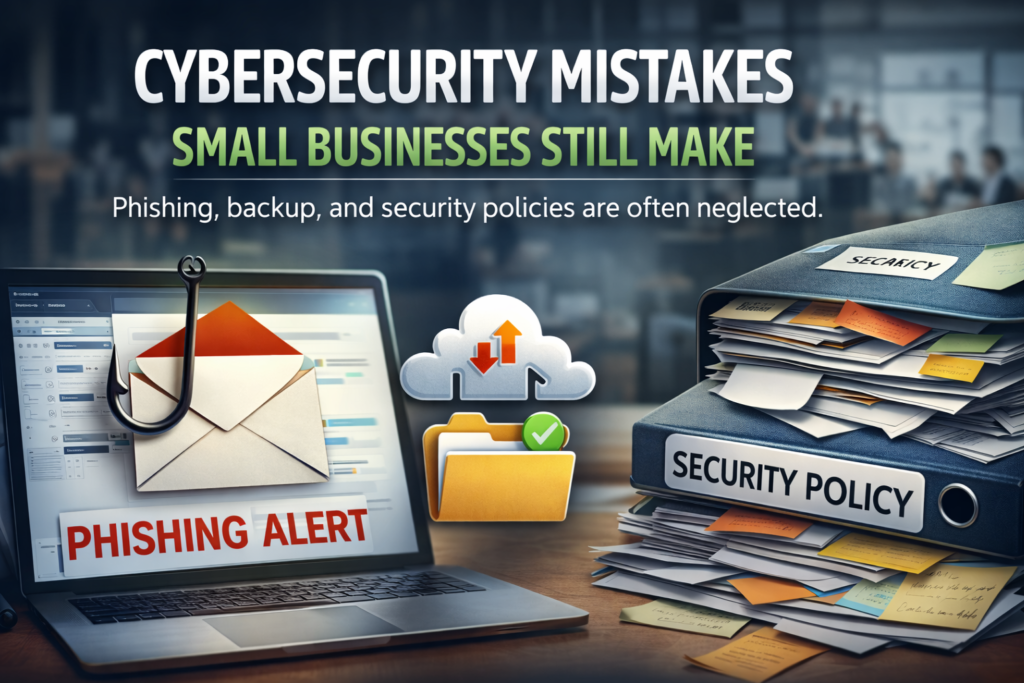
5. Underestimating Phishing Risk
Phishing remains one of the easiest ways for attackers to reach a business. A fake login page, urgent payment request, or message pretending to be from a trusted supplier can lead to account compromise or financial loss.
What to do instead . . .
Train staff to pause before clicking links, opening unexpected attachments, or acting on urgent requests without verification. Even brief, practical awareness reminders can help staff become more alert to suspicious activity.
6. Failing to Secure the Business Website
For many businesses, the website is the front door of the organisation. But websites are often neglected from a security perspective. Weak administrator credentials, abandoned plugins, missing updates, and poor configuration can create avoidable exposure.
At minimum, set expectations around
- password and MFA use
- acceptable device use
- access permissions
- secure file sharing
- reporting suspicious activity
Policies do not need to be long-lasting to be effective. They need to be practical, understood, and followed.
What Good Looks Like . . .
A more secure small business usually does a few basic things well:
- protects key accounts with MFA
- limits access by role
- updates systems consistently
- maintains reliable backups
- trains staff to recognise suspicious activity
- reviews website and cloud security regularly
- documents simple security expectations
This kind of approach is realistic, affordable, and far more effective than leaving security to chance.
Final Thoughts
Cybersecurity problems in small businesses are often not caused by a complete lack of tools. More often, they result from inconsistent basics. When the fundamentals are ignored, risk grows quietly in the background until something goes wrong.
Businesses that focus on practical controls, regular reviews, and clear accountability place themselves in a much stronger position. Cybersecurity does not have to be overwhelming, but it does need to be taken seriously.
Call to Action
Cholcom helps small businesses strengthen cybersecurity through practical reviews, clearer controls, and straightforward support. If you would like a professional assessment of your current setup, contact Cholcom to discuss your next steps.

0 Comments